Wondering whether a gated home in the Memorial Villages is the better fit, or if a non-gated street gives you more of what you want day to day? It is a smart question, especially in an area where privacy, access, and property upkeep all matter. If you are weighing both options, it helps to look past the gate itself and focus on how each setting works in real life. Let’s dive in.
Memorial Villages context
In the Memorial Villages, gated versus non-gated living is usually not a village-wide distinction. The area includes six separate municipalities: Bunker Hill, Hedwig, Hunters Creek, Hilshire, Piney Point, and Spring Valley.
That matters because the Memorial Villages do not operate like one master-planned community with a single set of neighborhood rules. Instead, city services, land-use rules, and utility oversight vary by municipality, while gated access is often a subdivision-level or property-level feature layered on top.
Spring Valley notes that zoning was a primary reason for incorporation, and Bunker Hill states that its ordinances have helped preserve the city’s character. In practical terms, that means you are already buying into a structured municipal setting, whether the home sits behind a gate or not.
What a gate really changes
A gate can change how a home feels the moment you arrive. It often creates a more controlled entry experience and a stronger sense of separation from the street.
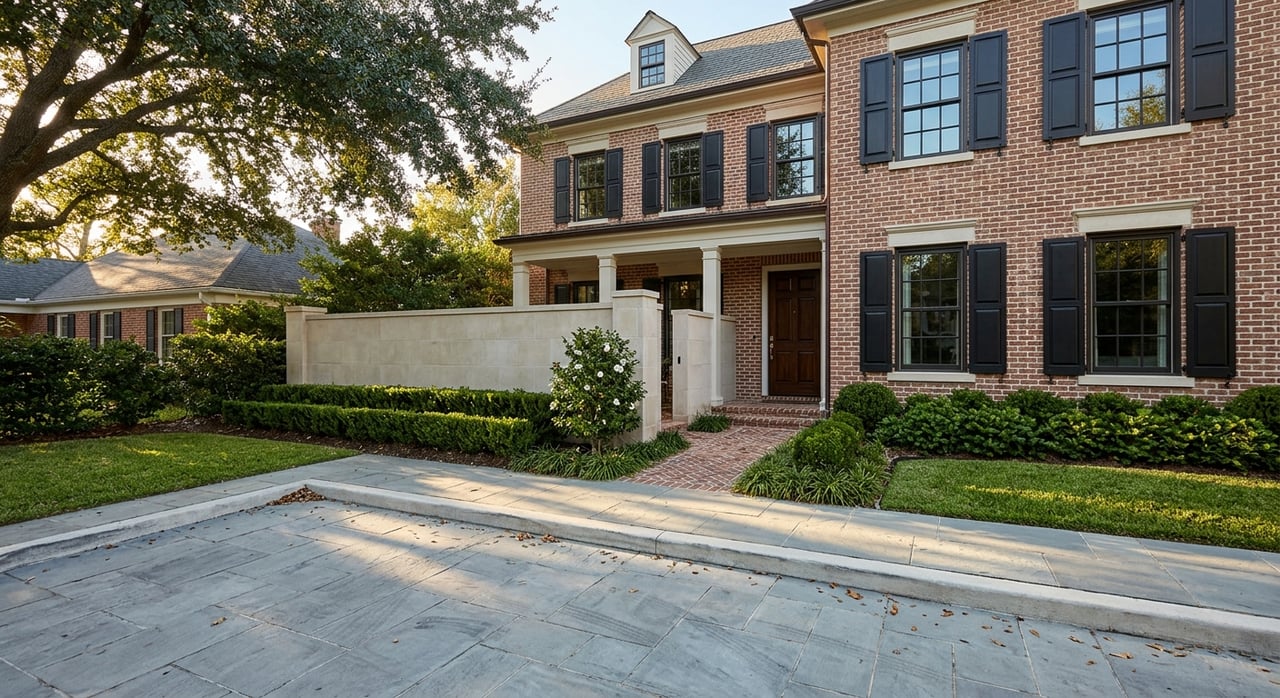
In parts of the Memorial Villages, homes with private gated entrances do exist. A recent Piney Point Village listing described a home with a private gated entrance, which is useful as a local example, though not a complete inventory of all gated properties in the area.
For many buyers, the main appeal is simple: controlled access and a more enclosed feel. If privacy at the point of entry matters most to you, a gated home may move to the top of your list.
Gated access can add daily logistics
A gate can also add another layer to everyday routines. Deliveries, guests, vendors, and service providers may need instructions, codes, or timing that would not matter as much on an open street.
That is especially important in the Memorial Villages because local trash and recycling practices often depend on street visibility and access. Bunker Hill, Hedwig, and Piney Point all state that collection must remain visible from the street and not behind a closed or locked gate or fence.
If you are considering a gated property as a low-touch or lock-and-leave home, this detail is worth careful review. A beautiful gate may support privacy, but it does not remove the need to plan for regular service access.
Why non-gated living appeals to many buyers
Non-gated living usually offers a simpler flow for everyday life. Guests can arrive more easily, service providers can access the property with fewer steps, and routine city or utility-related services often feel more straightforward.
In the Memorial Villages, non-gated does not automatically mean less privacy. Piney Point describes quiet, tree-lined neighborhoods, and Hedwig describes a quiet place away from the big city. Across the villages, privacy often comes from lot size, mature trees, and local land-use rules rather than from a gate alone.
For some buyers, that is the key distinction. If you want a private residential setting without adding an extra access system to manage, a non-gated property may feel like the more practical fit.
Maintenance is a two-layer issue
One of the biggest misconceptions about gated living is that the gate itself somehow simplifies ownership. In the Memorial Villages, maintenance responsibilities are still shaped first by city rules and then, in some cases, by HOA rules.
Bunker Hill Public Works manages water, wastewater, drainage, streets, sidewalks, and other infrastructure, and it states that property owners are responsible for leaks on their property and the resulting charges. Spring Valley also shows city-run administration for water, wastewater, and garbage and recycling services.
Piney Point’s zoning board handles variances, and its urban forester pages reflect active tree-permit rules. Hedwig’s building checklist also describes the city as a zoned community. In other words, a gate does not replace the need to understand permitting, exterior changes, tree rules, or utility responsibilities.
HOA rules may add another approval step
In some settings, especially those with association governance, you may have an added review process beyond city requirements. A local example is Tara Oaks HOA in Hunters Creek Village, which states that architectural changes such as fences, generators, driveways, exterior work, and new builds require HOA approval, while major permitting is handled by the city.
That layered approval process can matter whether you are planning a renovation now or simply want flexibility later. Before you buy, it is wise to confirm what the city controls, what an HOA controls, and how those approvals work together.
Lock-and-leave living is not only for gated homes
Many buyers assume a gate is the main path to a lock-and-leave lifestyle. In the Memorial Villages, the picture is more nuanced.
Bunker Hill offers House/Vacation Watch and community alert signup. Spring Valley offers a Home Safe program. The Village Fire Department serves all six villages.
These local support systems mean a non-gated home can also work well for owners who travel often or want a lower-touch routine. In some cases, easier vendor access and simpler curbside service can actually make a non-gated property easier to manage while you are away.
Community feel can differ
Beyond logistics, the choice often comes down to the kind of daily environment you prefer. In the Memorial Villages, official city pages point to a broader civic structure that shapes how neighborhoods feel.
Spring Valley’s new resident information highlights a city park and resident resources. Hunters Creek highlights trails and an active city website. Bunker Hill’s welcome materials emphasize resident communications and city information.
Taken together, those details suggest that non-gated living may feel more connected to the wider village street grid and civic life. A gated enclave may feel more self-contained and more centered on the immediate neighborhood or association.
That does not make one better than the other. It simply means your decision should reflect how you want your home to function, not just how you want it to look from the curb.
How to choose the right fit
If you are deciding between gated and non-gated living in the Memorial Villages, start with your daily priorities rather than assumptions.
Choose gated if you value:
- Controlled entry
- A more enclosed arrival experience
- A stronger sense of separation from the street
- Managing guest, delivery, and vendor access as part of your routine
Choose non-gated if you value:
- Easier access for visitors and service providers
- Simpler trash, recycling, and yard waste logistics
- Privacy that comes from lot size, trees, and zoning rather than gates
- A more open connection to the surrounding neighborhood streetscape
What to confirm before you buy
In the Memorial Villages, details matter. Because services and oversight can vary by municipality, it helps to verify the practical items that will affect how you live in the home.
Before moving forward on a property, confirm:
- Trash and recycling placement rules
- Whether access must remain visible from the street
- Any HOA approval process for gates, fences, driveways, generators, or exterior work
- Which city or authority handles water and wastewater service
- Whether tree permits or zoning approvals may affect future plans
This kind of due diligence is where local, process-driven guidance can make a real difference. The right home is not just the one that looks right on paper. It is the one that fits your routines, expectations, and long-term plans.
If you are comparing gated and non-gated homes in Memorial, working with a team that understands both the neighborhood fabric and the municipal layers can help you make a more confident choice. To talk through your goals and identify the right fit, connect with Cathy Cagle & Sarah Callaway Sulma.
FAQs
What does gated living mean in the Memorial Villages?
- In the Memorial Villages, gated living is usually a subdivision-level or property-level feature rather than a village-wide category across all six municipalities.
Is non-gated living in the Memorial Villages still private?
- Yes. In many parts of the Memorial Villages, privacy often comes from lot size, mature trees, and local zoning and land-use rules rather than from a gate alone.
Do gated homes in the Memorial Villages make service access harder?
- They can. Local rules in Bunker Hill, Hedwig, and Piney Point state that trash and similar collection must remain visible from the street and not behind a closed or locked gate or fence.
Are gated homes in the Memorial Villages easier for lock-and-leave owners?
- Not always. Gated homes offer controlled entry, but non-gated homes can also work well for lock-and-leave owners because local programs like House/Vacation Watch and Home Safe support travel-friendly ownership.
Should buyers check HOA and city rules before buying in the Memorial Villages?
- Yes. Buyers should confirm city service details, trash placement rules, tree and exterior change requirements, and any HOA approval process that may apply to the property.
How do I choose between gated and non-gated homes in Memorial?
- Focus on how you live day to day. If controlled entry matters most, gated may be the better fit. If easy access, simpler service logistics, and an open street rhythm matter more, non-gated may be the better choice.